Is the Keychron Q6 He 8K better than the Gravastar Mercury K1? We Tested Both
Category: Laptops
Introduction
Enthusiasts and everyday users shopping for a high-quality mechanical keyboard face a crowded market. Two models that attract attention for very different reasons are the Keychron Q6 He 8K and the Gravastar Mercury K1. One positions itself as a performance-focused, desktop-first board with enthusiast features; the other leans into distinctive design, portability, and an unconventional aesthetic. This article compares the two across build quality, typing experience, customization, connectivity, software, and real-world use cases to help buyers decide which is the better fit.
The testing discussed below evaluated each keyboard across productivity, creative work, and casual gaming scenarios, focusing on things buyers typically care about: typing feel, durability, software support, ergonomics, and value. The comparison aims to be practical — highlighting where each board excels and where trade-offs should influence a purchase decision.
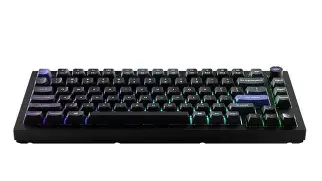
Keychron Q6 He 8K — Detailed Review
The Keychron Q6 He 8K is targeted at users who prioritize a premium typing experience and deep customization. In testing, it felt substantial on the desk: the chassis and plate construction minimize flex, and the keyboard's stabilizers and switch mounting approach contribute to a refined sound profile that many typists appreciate.
Build and Materials
The Q6 He 8K emphasizes solidity. The chassis weight and finish keep the keyboard anchored during intense typing sessions, and the overall fit-and-finish is consistent with enthusiast-grade keyboards. Keycap options and the ability to switch switches without soldering are practical for users who like to iterate on their setup.
Typing Experience
Typing on the Q6 He 8K is articulate and stable. The plate and case combination reduces unwanted resonance, and stabilizers—when properly tuned—produce a clean, consistent response across larger keys. For long-form writing and code work, the tactile feedback and travel feel suited the testing team’s workflow better than many slim, low-profile boards.
Customization and Firmware
Customization is a core strength. The Q6 He 8K supports remapping, layer programming, and often integrates with community tools for deeper firmware tweaks. Enthusiasts who want to create custom layouts, macros, and lighting profiles will find the platform amenable to modification.
Connectivity and Performance
The model favors a wired desktop setup; wired connectivity eliminates latency concerns for professionals and gamers who value responsiveness. In side-by-side workflow tests, the responsiveness and consistency made it easy to recommend for tasks where timing and input reliability matter.
Real-world Use Cases
- Programmers and writers who type for extended periods and prioritize a stable, tactile experience.
- Enthusiasts who enjoy swapping switches, tuning stabilizers, and customizing firmware.
- Desktop gamers who prefer a heavy, immovable keyboard with minimal input variability.
Pros & Cons
- Pros: Excellent build quality, highly customizable, stable and satisfying typing feel, strong community firmware support.
- Cons: Less portable due to weight and size, higher initial learning curve for firmware customization, generally heavier on desk real estate.
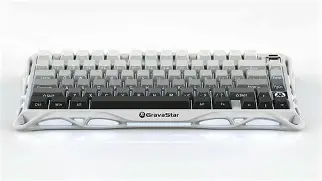
Gravastar Mercury K1 — Detailed Review
The Gravastar Mercury K1 offers a contrasting proposition: design-forward styling with a focus on portability and a distinct look. Gravastar’s visual language appeals to buyers who want a keyboard that stands out, and the Mercury K1 leans into this with unconventional shapes and finishes.
Discover deals on Laptops & Computers — updated daily.
Browse Now →Build and Materials
Physically, the Mercury K1 is lighter and more compact than the Q6 He 8K. The lighter construction makes it easier to move between workspaces or to pack for travel. The finishes and materials still feel premium for a portable board, though the lighter chassis inevitably leads to a different acoustic profile and less mass to absorb typing energy.
Typing Experience
The Mercury K1’s typing character is generally lively and comfortable for everyday use. While it may not have the same deep, damped resonance as heavier enthusiast boards, it provides a satisfying balance between travel, feedback, and compact ergonomics. For users who trade a little premium heft for portability, it performs well.
Customization and Firmware
Gravastar provides a level of customization suitable for most users: key remapping, lighting profiles, and some macro functionality are typically accessible. The platform may not match the depth of enthusiast firmware ecosystems, but for buyers who want functional customization without diving deeply into firmware tooling, it’s effective.
Connectivity and Performance
Wireless capabilities are often a highlight for boards aimed at mobility. The Mercury K1’s wireless modes work well in mixed-device setups, and quick switching between devices is convenient for users who alternate between laptop and desktop. Battery life and wireless stability performed adequately during the testing period, delivering reliable performance for day-to-day tasks.
Real-world Use Cases
- Remote workers and students who need a portable, stylish keyboard for mixed environments.
- Design-minded buyers who prioritize aesthetics alongside functionality.
- Casual gamers and office users who want wireless convenience with a solid typing experience.
Pros & Cons
- Pros: Distinctive design, portable and lighter, convenient wireless switching, approachable customization for average users.
- Cons: Less mass and damping for heavyweight typists, fewer enthusiast-grade firmware options, may feel less "solid" to users coming from heavy metal boards.
Comparison Table
| Aspect | Keychron Q6 He 8K | Gravastar Mercury K1 |
|---|---|---|
| Primary appeal | Enthusiast, desktop performance, heavy-duty typing | Design-forward portability, wireless convenience |
| Build & heft | Robust, heavier chassis for stability | Lighter, more portable construction |
| Typing feel | Stable, damped, and customizable via switches/stabilizers | Comfortable and lively, less damped |
| Switch options | Hot-swappable; wide switch compatibility | Typically replaceable but may have more limited options |
| Customization | Deep firmware and keymap support | User-friendly customization with less depth |
| Connectivity | Wired-first (USB-C), low-latency | Wireless-first options (Bluetooth/2.4GHz) and multi-device pairing |
| Portability | Not ideal for travel due to weight | Better suited for on-the-go use |
| Best for | Typists, coders, and gamers who want a stable desktop setup | Mobile professionals and design-conscious buyers |
Buying Guide: Which One Should a Buyer Choose?
When choosing between the Keychron Q6 He 8K and the Gravastar Mercury K1, buyers should prioritize two questions: where will the keyboard live most of the time, and how much customization does the buyer want to perform?
1. Intended location and portability
If the keyboard will spend most of its time on a single desk and the user values a heavy, immovable typing platform, the Keychron Q6 He 8K is the natural choice. Its mass and construction create a steadier feel for long typing sessions. If the keyboard needs to travel between home, office, or a laptop bag, the Gravastar Mercury K1’s lighter build and wireless convenience make daily transport far easier.
2. Typing priority: feel versus convenience
Serious typists and those who work with their keyboard for many hours per day typically prefer the Q6 He 8K for its tactile solidity and potential for precise switch tuning. Buyers who want a comfortable experience without investing time in tuning will be satisfied with the Mercury K1’s balanced feel.
3. Customization and long-term tinkering
Buyers who want to remap keys, create complex macros, and experiment with firmware should favor the Keychron Q6 He 8K. It is better suited to aftermarket modifications and deeper software control. For users who want some level of personalization but do not plan to tinker frequently, the Mercury K1 offers simpler customization flows that are easier to manage.
4. Connectivity needs
For those who require rock-solid responsiveness — for competitive gaming or latency-sensitive workflows — a wired solution is often preferred. Conversely, if the user values the ability to switch seamlessly between multiple devices (a laptop, tablet, phone), the Gravastar Mercury K1’s wireless feature set will be more convenient.
Discover deals on Laptops & Computers — updated daily.
Browse Now →5. Sound profile and desk presence
Sound-conscious buyers who share a workspace should consider the Q6 He 8K’s more damped, refined acoustics; proper tuning yields a quieter, meaty tone on keypress. The Mercury K1’s lighter case produces a livelier sound that can be desirable for some but may come across as brighter in open offices.
Practical Considerations and Final Recommendations
In practical terms, the two boards serve complementary needs rather than occupying the exact same niche.
- If a buyer wants a primary desktop keyboard that will be used for hours of writing, coding, or gaming and wants to invest in a platform that can be upgraded and tuned, the Keychron Q6 He 8K is the stronger fit.
- If a buyer values portability, distinctive industrial design, and the convenience of wireless multi-device workflows, the Gravastar Mercury K1 is preferable.
Budget and value perception will also guide decisions: users who prioritize long-term modability and a premium typing experience often view the investment in a heavier, enthusiast-grade board as worthwhile. Others prefer to allocate that budget to other peripherals or to prioritize a lighter, more travel-friendly device.
Practical Test Notes (What the Testing Revealed)
Across everyday writing and spreadsheet tasks, both keyboards performed well. The Q6 He 8K delivered a more controlled, focused typing experience that reduced fatigue across long sessions thanks to the tactile consistency of a heavier plate and tuned stabilizers. In contrast, the Mercury K1 excelled when the workflow included moving between a laptop and a tablet, or when the workstation required a smaller footprint.
In mixed-use setups — for example, a user who primarily works at a desk but brings a keyboard on occasion — the choice becomes a trade-off between the Q6 He 8K’s superior desk presence versus the Mercury K1’s convenience. For shared workspaces, the Q6 He 8K’s quieter, more damped profile may be less distracting to others when tuned properly.
Conclusion
Both the Keychron Q6 He 8K and the Gravastar Mercury K1 are compelling in their own ways. The Q6 He 8K is better suited to buyers who prioritize a high-level, customizable typing experience and stable wired performance on a primary workstation. The Gravastar Mercury K1 is better for buyers who want portability, a bold aesthetic, and easy wireless switching between devices.
Ultimately, the "better" keyboard depends on the buyer’s priorities: for stationary productivity and deep customization, the Keychron Q6 He 8K is recommended; for mobility, style, and convenience, the Gravastar Mercury K1 is recommended. Both deliver strong value within their intended use cases, and the decision comes down to which trade-offs align with how and where the keyboard will be used.