The Ultimate Showdown: Lg Stanbyme 2 vs Kef Xio for 2026
As we navigate the middle of 2026, the landscape of home entertainment and personal display technology has shifted dramatically. The days when a "television" was strictly a static black rectangle mounted to a wall or sitting on a heavy credenza are long gone. Today, consumers are demanding flexibility, mobility, and high-fidelity integration into their living spaces. This evolution has birthed two of the most talked-about devices of the year: the LG StanbyME 2 and the KEF Xio. While both products offer visual and auditory excellence, they represent two fundamentally different philosophies of how we consume media in a modern, connected home.
On one side, we have the LG StanbyME 2, a sequel to the viral sensation that redefined the "lifestyle" category. LG has doubled down on the concept of the "companion screen"—a device that follows you from the kitchen to the bedroom and even the bathroom. On the other side, the KEF Xio marks the legendary British audio brand’s aggressive entry into the display market. Known for their world-class speakers, KEF’s Xio is a masterclass in acoustic-first design, challenging the notion that a slim screen must sacrifice sound quality. This article dives deep into these two heavyweights to help you decide which one deserves a place in your home in 2026.
The Evolution of Versatile Displays
To understand why the StanbyME 2 and the Xio are competing, we must look at the "Screen Everywhere" trend. Modern buyers are less interested in having five different televisions and more interested in having one or two highly capable displays that can adapt to different contexts. The LG StanbyME 2 addresses this through mechanical mobility—a screen on a pole with wheels. The KEF Xio addresses this through environmental adaptability—a screen that serves as a high-end Hi-Fi system just as much as a 4K display.
In 2026, we also see a significant push toward sustainable materials and power efficiency. Both LG and KEF have made strides here, with LG utilizing recycled plastics for the rear casing of the StanbyME 2 and KEF opting for an aluminum and sustainable textile aesthetic for the Xio. These aren't just gadgets; they are pieces of furniture meant to complement interior design rather than disrupt it.
LG StanbyME 2: The Mobility King Refined
The original StanbyME was a sleeper hit for LG, appealing to a demographic that prioritizes TikTok and YouTube viewing over traditional broadcast TV. With the LG StanbyME 2, the company has addressed nearly every criticism of the first generation. The screen size has been bumped up to a more immersive 32-inch panel, while the resolution has finally moved to 4K, providing the crispness required for high-end gaming and professional productivity tasks.
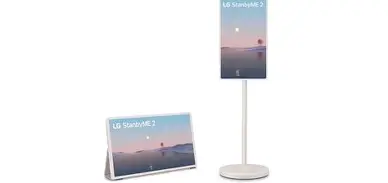
The centerpiece remains the swivel-and-tilt mechanism. The StanbyME 2 allows for effortless rotation into portrait mode, which is the native orientation for much of today's social media content. For the 2026 model, LG has introduced the "Smart-Grip" hinge, which allows for even more aggressive tilt angles, making it perfect for someone who wants to lie flat on the floor for yoga or stretching while following a workout class. The hidden wheels in the base have also been upgraded with a brushless, silent glide system, ensuring that moving the unit across hardwood or carpet is practically effortless.
Battery life was a major pain point in the past, but the StanbyME 2 now boasts a consistent five-hour runtime. This is achieved through a new high-density lithium-sulfur battery pack located in the base. This provides enough juice for a double-feature movie or a long afternoon of remote work on the balcony. LG’s webOS interface has also been tailored for touch interactions on this device, featuring a "Quick-Launch" sidebar that recognizes when the screen is rotated, automatically surfacing mobile-optimized apps like Instagram, TikTok, and various recipe platforms.
KEF Xio: The Audiophile’s Visual Dream
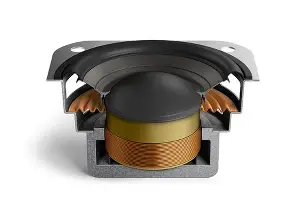
The KEF Xio is a different animal entirely. KEF didn't set out to make a screen that rolls around; they set out to make a screen that sounds like a concert hall. The Xio is a 34-inch ultra-wide 5K2K display built into a chassis that features KEF’s signature Uni-Q driver technology. For those unfamiliar, Uni-Q places the tweeter in the acoustic center of the midrange cone, creating a single point source that distributes sound evenly throughout the room. In the Xio, this technology is used to create a soundstage that feels far wider than the physical dimensions of the screen.
The Xio is built on a pedestal that emphasizes stability and resonance control. While it isn't meant to be wheeled from room to room as easily as the LG, it is surprisingly lightweight at under 15 pounds, making it easy to carry by its integrated leather-wrapped handle. KEF’s philosophy is that "media is 50% sound," and the Xio proves it. It supports 24-bit/192kHz high-resolution audio streaming natively, allowing it to function as a standalone high-end speaker when the screen is powered off or displaying ambient art.
Find top-rated TVs & Home Theater products at great prices.
Shop Amazon →The display panel on the Xio is a QD-OLED (Quantum Dot Organic Light Emitting Diode), offering perfect blacks and an incredibly wide color gamut. For 2026, KEF has included a proprietary "Acoustic-Sync" chip that analyzes the audio signal and micro-adjusts the screen's refresh rate and brightness to reduce eye strain during high-fidelity music listening sessions. It is a device tailored for the connoisseur—someone who spends their evenings watching 4K criterion collection films or streaming live orchestral performances.
Deep Dive Comparison: LG vs KEF
Choosing between these two depends heavily on your specific lifestyle. To provide a clearer picture, we must compare them across the metrics that matter most: display quality, audio performance, smart features, and build quality.
Display Technology and Performance
LG uses an IPS-based LED panel with an advanced "Nano-Textured" coating. This coating is essential for a mobile device because it significantly reduces reflections from windows or overhead lights as you move the unit around. While it lacks the infinite contrast of OLED, the brightness is impressive, topping out at 600 nits, which is plenty for a bright sunroom. The 4K resolution on a 32-inch screen creates a high pixel density, making text extremely sharp for those using it as a secondary monitor for their laptop.
The KEF Xio, however, wins on raw image quality. The QD-OLED panel is simply breathtaking. Because every pixel is its own light source, the Xio can achieve true black, making it superior for viewing in darkened rooms. The 5K2K resolution (5120 x 2160) provides more horizontal real estate, which is a boon for multitaskers. If you are a film enthusiast who wants to see every detail in the shadows of a moody thriller, the Xio is the clear victor in the visual department.
Audio Execution
The LG StanbyME 2 features a 2.1 channel 40W system. It is surprisingly loud and clear for its size, with the speakers firing downward from the bottom of the screen. It works great for podcasts, YouTube videos, and casual TV show streaming. However, it lacks deep bass and starts to feel strained at higher volumes. LG provides an option to pair the device with their "StanbyME Speaker" (sold separately), which can be clipped onto the pole, but as a standalone unit, it is merely "good."
The KEF Xio is in another league. It features a 100W tri-amplified system. Comparing the Xio’s audio to the StanbyME 2 is like comparing a high-res digital file to a vinyl record played on a world-class turntable. The Xio offers a sense of "air" and "placement." Vocals sound like they are coming from a person standing in front of you, and the bass is tight and punchy thanks to the force-canceling woofers built into the rear of the cabinet. For anyone who prioritizes music or cinematic soundscapes, the Xio isn't just a TV; it’s an audio system that happens to have a world-class screen attached.
Mobility and Battery
This is where the LG takes the lead. The StanbyME 2 is designed to be untethered. Its base contains a battery that keeps it alive for 5+ hours, and its wheels are designed for the "roaming" lifestyle. You can start a movie in the living room while your partner watches something else, then wheel it into the kitchen to follow a recipe, and finally move it to the bedside for a late-night show. It thrives in homes with open floor plans.
The KEF Xio, while portable, is not mobile in the same way. It is "lug-able." You can pick it up and take it into another room, but it lacks an internal battery for 2026. KEF made the decision to omit the battery to save weight and maximize the internal volume for the speakers. This means you must always be near a power outlet. For many, this is a deal-breaker for a "lifestyle" TV, but KEF argues that their target user doesn't want to compromise on audio power just to watch TV on a balcony for two hours.
Shop the latest TVs & Home Theater picks on Amazon.
Shop Amazon →Comparison Table
| Feature | LG StanbyME 2 | KEF Xio |
|---|---|---|
| Screen Size | 32-inch (16:9) | 34-inch (21:9 Ultra-wide) |
| Panel Type | IPS LED with Nano-Texture | QD-OLED |
| Resolution | 3840 x 2160 (4K) | 5120 x 2160 (5K2K) |
| Audio Output | 40W 2.1 Channel | 100W Uni-Q Tri-Amped |
| Battery Life | 5.5 Hours | N/A (Plug-in Only) |
| Movement | 5-Wheel Rolling Base | Integrated Carry Handle |
| OS | webOS 26 (Touch Optimized) | KEF Connect OS (AirPlay 3 / Google Cast) |
Pros and Cons
LG StanbyME 2
- Unmatched Versatility: The ability to roll the TV from room to room and rotate the screen to portrait mode remains its strongest selling point.
- Excellent Touch Interface: LG has spent years refining webOS for touch, making it as intuitive as a giant iPad.
- Anti-Glare Screen: The matte finish is perfect for bright rooms and handles reflections better than almost any other consumer TV.
- Portrait Mode Integration: Ideal for social media creators and those who consume "vertical" content frequently.
- Cons: Audio quality is functional but not exceptional; IPS panel lacks the deep blacks of OLED; base is somewhat bulky and takes up floor space.
KEF Xio
- Reference-Grade Sound: The best-sounding small-format display ever created, period.
- Stunning Visuals: The QD-OLED panel provides industry-leading contrast, color accuracy, and HDR performance.
- Build Quality: Uses premium materials like aluminum and Kvadrat textiles, making it feel like a piece of high-end furniture.
- Ultra-Wide Workspace: The 21:9 aspect ratio is fantastic for both cinematic films and side-by-side app multitasking.
- Cons: No internal battery requires it to stay plugged in; lacks wheels for easy transport; price point is significantly higher than the LG.
Buying Guide: Which One is Right for You?
Deciding between the LG StanbyME 2 and the KEF Xio requires an honest assessment of your daily habits. Technology in 2026 is no longer about "what is better," but rather "what fits your flow."
Buy the LG StanbyME 2 if:
You find yourself constantly moving around your home. If you enjoy cooking while watching tutorials, need a screen for a home gym that can be tucked away, or want a dedicated device for long video calls where you can sit comfortably on a sofa, the StanbyME 2 is unbeatable. It is essentially a piece of functional furniture that adapts to your physical position. It is also the better choice for households with children, as the sturdy base and rolling mechanism make it a durable and flexible screen for kids' entertainment anywhere in the house.
Buy the KEF Xio if:
You are an "active listener" and a "critical viewer." If you live in an apartment where space is at a premium and you want one device that serves as your primary Hi-Fi music system and your primary movie screen, the Xio is the better investment. It is a desktop or tabletop device that prioritizes the "soul" of the media—the sound and the color depth. It is perfect for a home office where it can act as a high-resolution workspace during the day and a luxurious entertainment hub at night.
Real-World Use Cases
Let's look at how these perform in 2026 scenarios. Imagine a "Work from Home" Friday. With the LG StanbyME 2, you start your morning in the breakfast nook with the screen in portrait mode reading the news. At 10:00 AM, you wheel it into your office to use as a secondary monitor via a wireless display link. In the evening, you wheel it onto the patio to watch a baseball game while you grill. This level of friction-less movement is what the StanbyME 2 offers.
Conversely, imagine a "Relaxation" Sunday with the KEF Xio. You have it sitting on your desk or a sideboard. Throughout the morning, you stream lossless audio from your phone via AirPlay; the screen remains off, and the device looks like a sleek modern sculpture. In the afternoon, you decide to watch a classic film. You sit back, and the QD-OLED panel combined with the Uni-Q soundstage creates an "envelope" of sound and light that feels far larger than the 34-inch screen suggests. The Xio provides a "destination" experience, even if that destination is just your favorite chair.
Conclusion
The LG StanbyME 2 and the KEF Xio represent two different peaks of 2026 display technology. LG has mastered the "Personal Mobility" television, creating a device that is as much a tool as it is a toy. Its battery life, improved 4K resolution, and effortless rolling mechanism make it the ultimate choice for the multi-tasking, high-energy household. It is a screen that lives with you.
The KEF Xio, meanwhile, has mastered the "Compact Luxury" television. It ignores the gimmicks of wheels and batteries to focus on the fundamental pillars of home entertainment: incredible sound and flawless picture. It is a screen that you live for. While the LG offers freedom of movement, the KEF offers freedom from mediocrity. Whichever you choose, you are looking at the forefront of how we will interact with digital media for the rest of the decade.